Balancing Equations Worksheet with Answers PDF: A Comprehensive Guide
Everett Community College offers worksheets, while Cavalcade Publishing provides answer keys; these PDF resources aid in mastering equation balancing, crucial for chemistry students․
Chemical equations are fundamental representations of chemical reactions, utilizing symbols and formulas to illustrate the substances involved․ These equations depict the reactants – the starting materials – and the products – the substances formed․ A core skill in chemistry is mastering how to interpret and, crucially, balance these equations․ Resources like worksheets, often available as PDF documents from institutions like Everett Community College and publishers such as Cavalcade Publishing, are invaluable tools for practice․
Understanding chemical equations isn’t merely about memorization; it’s about grasping the conservation of matter․ Balancing ensures the number of atoms for each element remains constant on both sides of the equation, reflecting this principle․ These worksheets, complete with answers, provide a structured approach to developing this essential skill․
What are Chemical Equations?
Chemical equations are symbolic representations of chemical reactions, showing reactants and products․ They use chemical formulas to denote the substances involved, and arrows (Æ) to indicate the direction of the reaction․ For example, N2 + 3H2 Æ 2NH3 illustrates nitrogen and hydrogen combining to form ammonia․ These equations aren’t just shorthand; they adhere to the Law of Conservation of Mass․
Worksheets, often found as PDFs from sources like Everett Community College and Cavalcade Publishing, utilize these equations for practice․ Mastering their interpretation is vital, and these resources, with provided answers, help students decode the language of chemistry, understanding what each component signifies within a reaction․
Why Balance Chemical Equations?

Balancing chemical equations isn’t merely a procedural exercise; it’s fundamental to upholding the Law of Conservation of Mass – matter cannot be created or destroyed․ An unbalanced equation violates this law, implying atoms appear or disappear during a reaction․ Worksheets, available as PDFs from institutions like Everett Community College and publishers like Cavalcade Publishing, provide practice in ensuring this conservation․
These resources, complete with answers, demonstrate how coefficients adjust to reflect the actual number of each atom involved․ Correctly balanced equations are essential for stoichiometric calculations, predicting reaction yields, and understanding chemical quantities accurately․
The Law of Conservation of Mass
The cornerstone of balancing chemical equations is the Law of Conservation of Mass, stating matter isn’t gained or lost in chemical reactions – atoms are merely rearranged․ This principle dictates that the number of atoms for each element must be identical on both reactant and product sides․ Balancing equations worksheets, often found as PDFs from sources like Everett Community College and Cavalcade Publishing, reinforce this concept․
These worksheets, with provided answers, help students visualize and apply this law, ensuring chemical equations accurately represent real-world transformations and maintain atomic integrity․
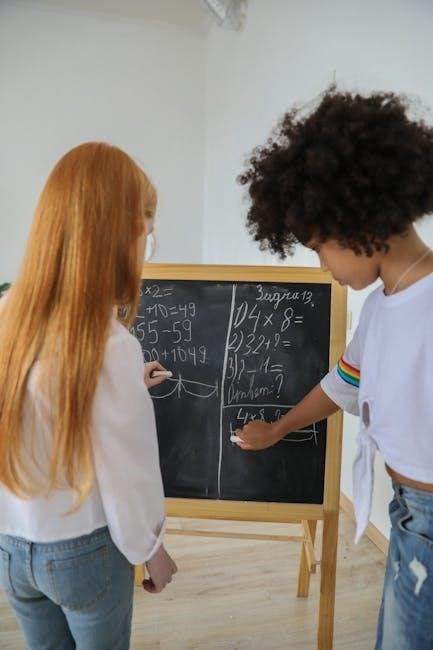
Understanding the Components of a Chemical Equation
Worksheets emphasize identifying reactants and products, alongside coefficients and subscripts, crucial for accurate balancing, often presented in PDF format․
Reactants and Products
Balancing equations worksheets, often available as PDF downloads, fundamentally require identifying reactants – the substances initially involved in a chemical reaction – and products, which are formed as a result․ These worksheets frequently present equations like “H3PO4 + KOH Æ K3PO4 + H2O,” demanding students correctly distinguish between what starts the reaction (reactants) and what is created (products)․
Accurate identification is the first step towards successful balancing․ The PDF worksheets often include multiple examples, progressively increasing in complexity․ Understanding this distinction is paramount; without it, applying coefficients correctly becomes impossible․ Mastering this concept, reinforced through practice with these worksheets, builds a strong foundation for more advanced chemistry concepts․
Coefficients and Subscripts
Balancing equations worksheets, commonly found as PDF files, heavily emphasize the difference between coefficients and subscripts․ Subscripts, within a chemical formula (like the ‘3’ in H3PO4), indicate the number of atoms of each element within a molecule․ Coefficients, placed before the formula, represent the number of molecules involved in the reaction․
A PDF worksheet example, “1 N2 + 3 H2 Æ 2 NH3,” illustrates this: ‘2’ before NH3 is a coefficient, signifying two ammonia molecules․ Changing subscripts is forbidden; it alters the chemical identity․ Only coefficients can be adjusted to ensure the same number of each atom type appears on both sides of the equation, a core skill practiced through these worksheets․
States of Matter (s, l, g, aq)
Balancing equations worksheets, often available as PDF downloads, frequently include indicators of states of matter․ These are denoted by symbols in parentheses: (s) for solid, (l) for liquid, (g) for gas, and (aq) for aqueous solution (dissolved in water)․ While not directly impacting the balancing process itself, accurately representing these states is crucial for a complete and correct chemical equation․
For instance, a PDF example might show HCl(aq) + NaOH(aq) Æ NaCl(aq) + H2O(l)․ Including these states provides a fuller picture of the reaction․ Mastering this notation alongside balancing skills, as practiced on these worksheets, demonstrates a comprehensive understanding of chemical processes․
Methods for Balancing Equations
PDF worksheets commonly utilize trial and error, coefficient adjustments, and polyatomic ion balancing to achieve accurate, balanced chemical equations for practice and assessment․
The Trial and Error Method
The trial and error method, frequently employed with balancing equations worksheets (often in PDF format), involves systematically adjusting coefficients until the number of atoms for each element is equal on both sides of the equation․ This approach, while sometimes tedious, builds a foundational understanding of equation balancing․
Begin by inspecting the most complex molecule and tentatively adjusting its coefficient․ Then, proceed to balance other elements, iteratively modifying coefficients as needed․ Remember, coefficients must be whole numbers․ Cavalcade Publishing’s answer keys demonstrate successful applications of this method․ It’s crucial to continually check your work, ensuring no element becomes unbalanced during adjustments․ Practice with various PDF worksheets enhances proficiency in this fundamental technique, leading to quicker and more accurate balancing skills․
Using Coefficients to Balance
Effectively utilizing coefficients is central to balancing chemical equations found in balancing equations worksheets, often available as PDF downloads․ Coefficients—numbers placed before chemical formulas—multiply the number of atoms of each element in that formula․ Adjusting these coefficients ensures the Law of Conservation of Mass is upheld․
For instance, when working through examples like those with answer keys from Cavalcade Publishing, strategically increase or decrease coefficients․ Avoid changing subscripts within formulas, as this alters the chemical identity․ A systematic approach, combined with careful counting of atoms on both sides, is key․ Mastering coefficient manipulation, through consistent practice with PDF worksheets, is vital for success in chemistry․
Balancing Equations with Polyatomic Ions
When encountering balancing equations worksheets – often in PDF format – containing polyatomic ions (like SO42- or PO43-), treat them as single units if they appear identically on both sides of the equation․ This simplifies the balancing process considerably․
Instead of balancing each individual atom within the polyatomic ion, focus on balancing the entire ion as a whole․ This technique is demonstrated in many answer keys, such as those provided by resources like Cavalcade Publishing․ However, if a polyatomic ion appears differently on each side (e․g․, as SO3 and SO42-), you must balance the individual atoms․ Consistent practice with PDF worksheets builds proficiency․

Common Equation Types & Examples
Balancing equations worksheet examples include acid-base, redox, and combustion reactions; mastering these, with provided PDF answer keys, builds a strong chemistry foundation․
Acid-Base Neutralization Reactions
Acid-base neutralization reactions involve the reaction of an acid with a base, typically producing a salt and water․ A balancing equations worksheet often features these, requiring students to ensure the number of hydrogen and hydroxide ions are equal on both sides․ For instance, HCl + NaOH → NaCl + H₂O is a classic example․
Successfully balancing these equations reinforces the law of conservation of mass․ PDF worksheets with answer keys, like those from Everett Community College and Cavalcade Publishing, provide valuable practice․ Students learn to identify acids, bases, salts, and water, then apply coefficients to balance the equation, confirming the reaction’s stoichiometry․ Mastering this type of reaction is fundamental to understanding chemical processes․
Redox reactions, involving electron transfer, present a more complex balancing challenge than simple acid-base reactions․ A balancing equations worksheet will often include examples where elements change oxidation states․ While a full treatment is beyond introductory scope, students begin to recognize oxidation (loss of electrons) and reduction (gain of electrons)․
Worksheets, often available as PDF downloads from resources like Everett Community College and Cavalcade Publishing, introduce the concept through simpler examples․ Balancing requires careful attention to the number of atoms and the overall charge․ Answer keys are crucial for self-assessment․ Understanding redox is vital for comprehending corrosion, combustion, and many biological processes․
Combustion Reactions
Combustion reactions, a common type found on balancing equations worksheets, involve rapid reactions between a substance with an oxidant, usually oxygen (O2), producing heat and light․ These often result in the formation of carbon dioxide (CO2) and water (H2O)․
PDF worksheets from sources like Cavalcade Publishing and educational institutions frequently feature hydrocarbon combustion․ Balancing these requires careful attention to carbon, hydrogen, and oxygen atoms․ Mastering these reactions is fundamental․ Answer keys provide essential verification․ Students learn to identify reactants and products, applying balancing techniques to ensure mass conservation, a core principle of chemistry․
Working with Balancing Equations Worksheets
Worksheets from Everett Community College and Cavalcade Publishing require identifying reactants, applying balancing strategies, and verifying results using provided PDF answer keys․
Identifying the Reactants and Products
Successfully balancing equations begins with correctly identifying reactants and products within each chemical equation presented on the worksheet․ Reactants, found on the left side of the arrow (Æ), are the initial substances undergoing a change․ Conversely, products, positioned on the right side, represent the substances formed as a result of the chemical reaction․
For example, in the equation “___ H3PO4 ___ KOH Æ ___ K3PO4 ___ H2O” (from Everett Community College’s materials), H3PO4 and KOH are the reactants, while K3PO4 and H2O are the products․ Accurate identification is paramount; mislabeling will lead to incorrect balancing․ Carefully examine the chemical formulas and their states (if indicated) to ensure proper categorization before attempting to balance the equation using a PDF guide or answer key․

Step-by-Step Balancing Strategies
When tackling a balancing equations worksheet (often found as a PDF), a systematic approach is key․ Begin by listing each element present in the equation․ Next, count the atoms of each element on both the reactant and product sides․ Use coefficients – numbers placed before chemical formulas – to adjust the quantities․
Focus on balancing one element at a time, starting with those appearing in only one reactant and one product․ Avoid changing subscripts within chemical formulas, as this alters the substance itself․ Cavalcade Publishing’s answer keys demonstrate this process․ Finally, double-check your work to ensure atom counts are equal on both sides, confirming a balanced equation․ Practice with various examples builds proficiency․
Checking Your Balanced Equation
After completing a balancing equations worksheet (available as a PDF from sources like Everett Community College and Cavalcade Publishing), rigorous verification is essential․ Recount all atoms of each element on both the reactant and product sides of the equation․ Ensure the number of atoms for each element is identical on both sides; discrepancies indicate an imbalance․
Compare your solution to provided answer keys, like those from Cavalcade Publishing, to identify any errors․ A correctly balanced equation adheres to the law of conservation of mass․ Systematically reviewing each step minimizes mistakes and reinforces understanding․ Consistent practice with these worksheets builds confidence and accuracy․
Resources and Answer Keys
PDF worksheets from Everett Community College and Cavalcade Publishing offer practice, while Cavalcade also provides readily available answer keys for self-assessment․
Where to Find Balancing Equations Worksheets (PDF)
Numerous online platforms offer downloadable balancing equations worksheets in PDF format․ Everett Community College’s Tutoring Center provides a valuable resource, offering worksheets directly accessible for student practice․ Additionally, Cavalcade Publishing (http://www․cavalcadepublishing․com) is a dedicated source, specifically designed for chemistry education materials;
These resources cater to various skill levels, from introductory exercises to more complex equation challenges․ Searching online using keywords like “balancing chemical equations worksheet PDF” will yield a plethora of options from educational websites and teacher resource sharing platforms․ Remember to preview the worksheets to ensure they align with the specific concepts being taught and practiced in your chemistry curriculum․ Utilizing these readily available PDF documents streamlines the learning process and provides ample opportunities for reinforcement․
Example Answer Key Walkthrough (Based on Provided Data)
Let’s examine an example from Cavalcade Publishing’s answer key․ The equation N2 + 3 H2 → 2 NH3 demonstrates a balanced chemical reaction․ Initially, there are two nitrogen atoms on the reactant side and two on the product side, maintaining balance․ Similarly, six hydrogen atoms (3 x 2) are present on both sides (3 x 2)․
Another example, 2 KClO3 → 2 KCl + 3 O2, shows two potassium and two chlorine atoms balanced on both sides․ Crucially, six oxygen atoms (2 x 3) are balanced with six oxygen atoms (3 x 2)․ This walkthrough illustrates how coefficients are adjusted to ensure the Law of Conservation of Mass is upheld, with equal numbers of each atom on both sides of the equation․ Correctly applying coefficients is key to mastering equation balancing․
Additional Online Resources for Practice
Beyond worksheets from sources like Everett Community College and Cavalcade Publishing, numerous online platforms offer interactive practice․ Daniel Harvey’s PowerPoint presentations provide effective teaching tools before tackling worksheets․ Websites specializing in chemistry offer equation balancers where you can input an equation and receive step-by-step guidance․
Furthermore, platforms like Mappy, while primarily navigation tools, demonstrate problem-solving skills applicable to balancing – planning routes requires adjusting variables․ Search for “balancing chemical equations practice” to find quizzes, tutorials, and additional PDF worksheets․ Consistent practice is vital for mastering this skill, solidifying understanding beyond simply checking answer keys․