Elenker Upright Walker Manual: A Comprehensive Guide
This manual details assembly, usage, adjustments, safety, and troubleshooting for your Elenker Upright Walker, maximizing benefits and ensuring safe, independent mobility.
The Elenker Upright Walker represents a significant advancement in mobility assistance, designed to provide users with enhanced stability and comfort. Unlike traditional walkers, the upright design encourages a more natural posture, reducing strain on the back and wrists. This innovative rollator is engineered for individuals seeking increased independence and a higher quality of life.
This comprehensive guide serves as your resource for understanding and utilizing all the features of your Elenker Upright Walker. From initial assembly to routine maintenance, we’ll cover every aspect to ensure a safe and enjoyable experience. The walker’s robust construction and adjustable components cater to diverse user needs, promoting confident and secure movement. Gift yourself or a loved one the joy of movement!
Key Features and Benefits
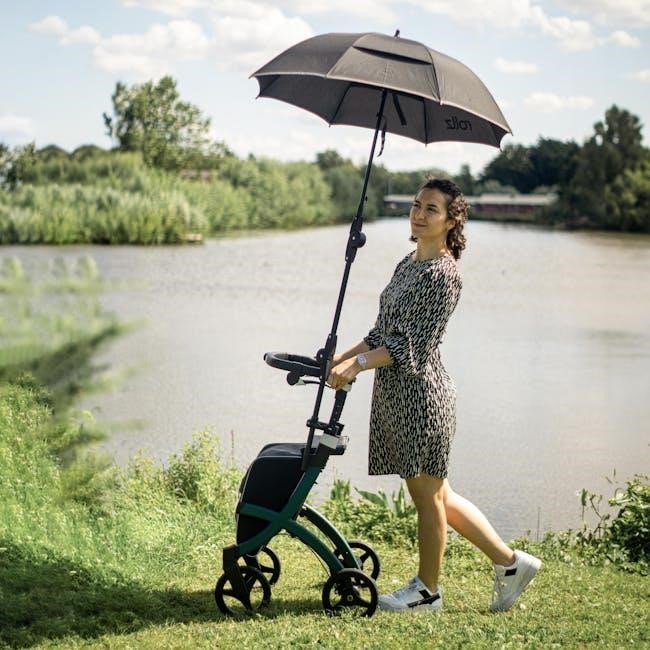
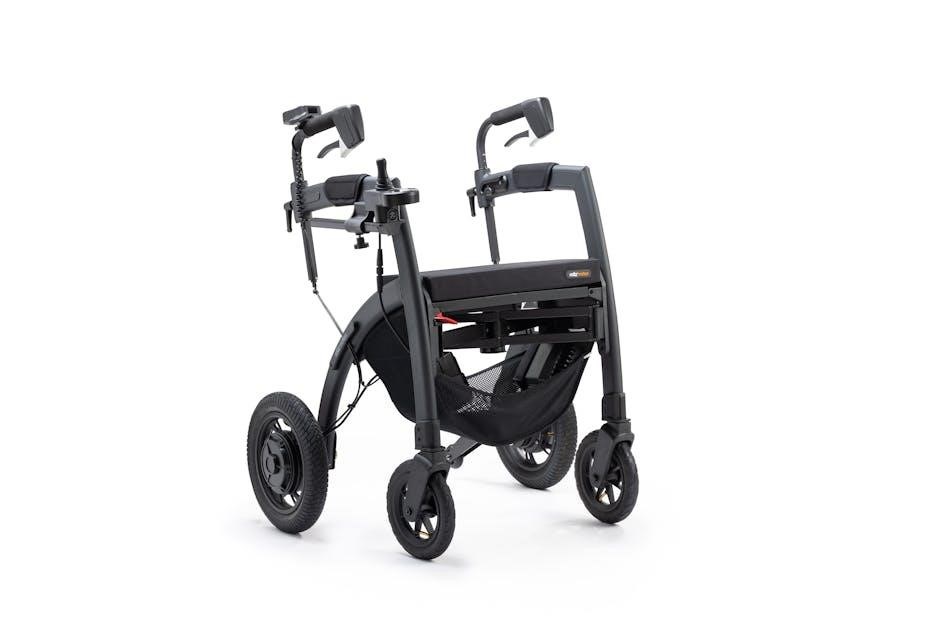
The Elenker Upright Walker boasts several key features designed for optimal user experience. These include adjustable armrests, providing customized comfort and support, and a comfortable, ergonomic seat for convenient resting. Its robust frame ensures stability and durability, supporting users up to 300lbs. Large, all-terrain wheels facilitate smooth navigation across various surfaces.
Benefits extend to improved posture and reduced strain, thanks to the upright walking position. The integrated braking system offers reliable stopping power, enhancing safety. Convenient accessories like a cup holder and cane holder add to the walker’s practicality. Experience merrier and brighter steps with this rollator, gifting independence and joyful movement!
Assembly Instructions
Assembling your Elenker Upright Walker is straightforward and designed for ease of use. Follow these detailed instructions to ensure proper setup and safe operation.
Unboxing and Parts Identification
Carefully unpack all components from the box, verifying that all listed parts are present. You should find the walker frame, front wheels (typically two), rear wheels with integrated brakes (also two), the seat, backrest, handlebars, and a bag containing necessary hardware like screws and bolts.

Refer to the parts list included in your manual to visually identify each component. Pay close attention to the different types of screws, as using the wrong one could damage the walker. Ensure no parts are missing or damaged before proceeding. If anything is amiss, contact Elenker customer support immediately. Proper identification is crucial for a successful assembly process, ensuring a safe and functional upright walker.
Attaching the Front Wheels
Begin by inserting the front wheels into the designated slots on the walker frame. Typically, this involves aligning the wheel stem with the opening and pushing firmly until it clicks into place. Ensure the wheels are securely fastened and rotate freely;
Some models may require a locking pin or screw to further secure the wheels. If provided, insert the pin or tighten the screw according to the manual’s instructions. Double-check that both front wheels are firmly attached and aligned correctly, as this impacts steering and stability. Improperly attached wheels can lead to difficulty maneuvering and potential safety hazards.
Installing the Rear Wheels and Brakes
To install the rear wheels, align them with the corresponding mounting points on the walker’s frame. Push firmly until they click securely into place, similar to the front wheel installation. Crucially, the rear wheels often house the braking system.
Verify the brakes are correctly connected and functioning. This usually involves attaching brake cables or levers to the wheel mechanism. Test the brakes by gently squeezing the hand levers – the rear wheels should engage and prevent movement. Ensure both brakes operate smoothly and effectively. Proper brake function is vital for safety, especially on inclines or uneven terrain.
Connecting the Seat and Backrest
Locate the seat mounting brackets on the walker frame. Carefully align the seat with these brackets and secure it using the provided screws or bolts. Ensure the seat is firmly attached and stable before use. Next, attach the backrest to the seat frame, again using the appropriate fasteners.
Verify the backrest provides adequate support and is securely connected. Some models may have adjustable backrests; if so, adjust to a comfortable position. The seat and backrest are designed for temporary resting, not prolonged sitting. Confirm all connections are tight to prevent wobbling or detachment during use.
Adjusting Handlebar Height
Locate the handlebar adjustment levers or knobs, typically found on the vertical posts of the handlebars. Loosen these mechanisms to allow the handlebars to slide up or down. Adjust the height to a comfortable level where your elbows are slightly bent when gripping the handles – avoid overextension or strain.
Once the desired height is achieved, firmly tighten the adjustment levers or knobs to secure the handlebars in place. Regularly check these adjustments as they can loosen with use. Proper handlebar height is crucial for maintaining good posture and control while walking, promoting comfort and safety.

Using Your Elenker Upright Walker
Maintain proper posture, grip the handles comfortably, and utilize the brakes when needed. The seat offers convenient resting points during your walks.
Proper Posture and Grip
Maintaining correct posture is crucial for comfort and safety while using your Elenker Upright Walker. Stand tall with your shoulders relaxed and avoid slouching. Your weight should be evenly distributed across both feet and hands.
When gripping the handlebars, ensure your hands are comfortably positioned without excessive tension. Avoid locking your elbows; a slight bend allows for better shock absorption and control.
The upright design encourages a more natural walking motion, but it’s important to avoid leaning too heavily on the walker. Use it for support, not as a crutch. Proper grip and posture minimize strain and maximize the benefits of your Elenker Upright Walker, promoting a confident and stable gait.
Operating the Brakes
Your Elenker Upright Walker is equipped with reliable brakes for safe stopping and stability. The brake levers are typically located on the handlebars, easily accessible to your hands. To engage the brakes, gently squeeze the levers inwards.
Practice using the brakes in a safe, open area to familiarize yourself with the amount of pressure needed for controlled stopping. Avoid sudden, forceful braking, which could cause you to lose balance.
Regularly check the brake function to ensure they are responsive and effective. Refer to the ‘Braking System Checks’ section for detailed inspection instructions. Proper brake operation is vital for navigating safely and confidently with your Elenker Upright Walker.
Utilizing the Seat for Resting
The Elenker Upright Walker features a comfortable seat designed for convenient resting when needed. To use the seat, ensure the walker is on a level surface and the brakes are firmly engaged for stability. Slowly lower yourself onto the seat, using the handlebars for support.
The seat is ideal for short breaks during longer walks, allowing you to regain energy without completely stopping your journey. The backrest provides additional support and comfort.
Always ensure you are securely seated and the brakes are locked before shifting your weight or attempting to stand up. Refer to the ‘Safety Precautions’ section for weight limitations and safe usage guidelines.
Navigating Different Terrains
Your Elenker Upright Walker is designed for use on various surfaces, but performance may vary. On smooth, even surfaces like sidewalks and indoor floors, the walker provides optimal stability and maneuverability. When encountering slightly uneven terrain, such as short grass or packed gravel, proceed slowly and cautiously.
For more challenging surfaces, like loose gravel or inclines, reduce your speed and maintain a firm grip on the handlebars. Engage the brakes as needed for added control.
Avoid steep slopes and extremely rough terrain, as these may compromise stability. Regularly check wheel condition for optimal performance across different surfaces.

Adjustments and Customization
Personalize your Elenker walker for optimal comfort and support! Adjust armrests, brake tension, and seat height to achieve a customized and secure fit.
Adjusting Armrest Height and Angle
The Elenker Upright Walker features adjustable armrests designed to enhance user comfort and support. To adjust the height, locate the release buttons or knobs on the armrest posts – typically found where the armrest connects to the walker frame. Press or loosen these mechanisms while simultaneously raising or lowering the armrest to your desired position.
Ensure both armrests are adjusted to the same height for balanced support. Some models also allow for angle adjustments, providing further customization. Look for additional levers or knobs that control the armrest’s rotational position. Proper armrest adjustment promotes good posture and reduces strain on your shoulders and wrists during use. Refer to your specific model’s diagram for precise instructions.
Fine-tuning Brake Tension
Maintaining optimal brake tension is crucial for safe operation of your Elenker Upright Walker. Over time, brake cables can stretch, resulting in reduced braking effectiveness. To fine-tune the tension, locate the brake cable adjustment mechanisms – often found near the brake levers or where the cables connect to the rear wheels.
Typically, these mechanisms involve a small screw or dial. Tightening the screw increases tension, while loosening it decreases tension. Test the brakes after each adjustment to ensure they engage firmly and smoothly; Avoid over-tightening, as this can cause the brakes to drag. If you’re unsure about this process, consult a qualified technician.
Seat Height Adjustment
Proper seat height is vital for comfortable and safe resting while using your Elenker Upright Walker. The seat height should be adjusted so your knees are slightly bent when seated, allowing for easy standing and sitting. Locate the seat height adjustment levers or buttons – these are usually positioned on the seat post.
Most models offer multiple height settings. Release the lever, adjust the seat to your desired height, and securely re-engage the lever to lock the seat in place. Always ensure the seat is locked before sitting. Regularly check the locking mechanism to prevent accidental lowering. Refer to the product manual for specific instructions related to your model.
Safety Precautions
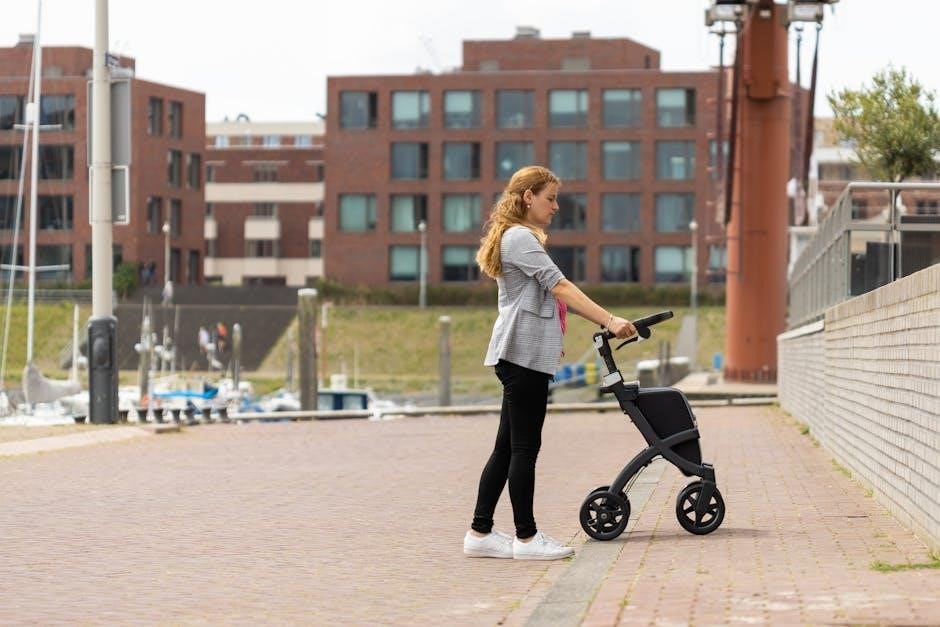
Prioritize safety by adhering to weight limits, regularly checking the braking system, and utilizing the walker within a safe, clear operating environment.
Weight Capacity and Limitations

Understanding the weight capacity of your Elenker Upright Walker is crucial for safe operation. Exceeding the maximum user weight of 300lbs can compromise the walker’s structural integrity and braking performance, potentially leading to instability or failure.
This walker is designed to support individuals within this specified weight range, ensuring optimal balance and control. It’s important to note that carrying additional weight in baskets or attached accessories also contributes to the overall load.
Avoid using the walker if your weight exceeds the limit, as this could void the warranty and, more importantly, increase the risk of falls and injuries. Regularly inspect the frame for any signs of stress or damage, especially if you are near the maximum weight capacity.
Braking System Checks
Regularly inspecting your Elenker Upright Walker’s braking system is paramount for safety. Before each use, firmly squeeze both brake levers to ensure they engage smoothly and securely lock the wheels. Check for any slack in the brake cables; if present, consult the ‘Fine-tuning Brake Tension’ section for adjustment instructions.
Verify that the brake pads make solid contact with the wheels when applied. Look for any signs of wear or damage to the brake pads themselves. If worn, replace them immediately.
Periodically test the brakes on a level surface to confirm their responsiveness. A properly functioning braking system is vital for controlled stops and preventing accidental rollaways, especially on inclines.
Safe Operating Environment
To ensure safe operation of your Elenker Upright Walker, always assess your surroundings. Utilize well-lit, level surfaces free from obstacles like rugs, cords, or uneven flooring. Avoid steep inclines, slippery conditions (wet floors, ice, snow), and crowded areas where maneuverability is restricted.
Be mindful of doorways and narrow passages, ensuring sufficient space to pass through comfortably. When crossing streets, exercise extreme caution and adhere to all traffic signals.
Never operate the walker in areas with heavy vehicle traffic or unstable ground. A clear, predictable environment significantly reduces the risk of falls or accidents, maximizing your independence and safety.

Maintenance and Care
Regular cleaning, wheel checks, and proper storage are vital for maintaining your Elenker Upright Walker’s longevity and optimal performance.
Cleaning Instructions
To ensure the longevity and hygiene of your Elenker Upright Walker, regular cleaning is essential. Begin by wiping down the frame with a damp cloth and mild detergent. Avoid abrasive cleaners, as they can damage the finish. For the seat and backrest, use a soft brush or cloth to remove any dirt or debris.
Pay close attention to the armrests, as they accumulate the most contact. Inspect the wheels for any buildup and clean them with a damp cloth, ensuring they rotate freely. Avoid getting water into the braking mechanisms. After cleaning, thoroughly dry all components to prevent rust or corrosion. Regular cleaning not only maintains the walker’s appearance but also contributes to its safe and reliable operation.
Wheel Maintenance
Proper wheel maintenance is crucial for smooth and safe operation of your Elenker Upright Walker. Regularly inspect the wheels for wear and tear, checking for cracks or damage. Ensure the wheels rotate freely and aren’t obstructed by debris. Clean the wheels with a damp cloth to remove dirt and grime, preventing binding.
Periodically check the wheel axles for looseness and tighten if necessary. If you notice excessive play or difficulty in rotation, consult a qualified technician. Avoid using lubricants on the wheels unless specifically recommended by Elenker. Maintaining your walker’s wheels ensures optimal maneuverability and stability, contributing to a secure walking experience.
Storage Guidelines
Proper storage extends the life of your Elenker Upright Walker and ensures it’s ready when you need it. When not in use, store the walker in a dry, indoor location, protected from extreme temperatures and direct sunlight. Avoid storing it in damp areas, as this can cause corrosion.
If possible, fold the walker to minimize its footprint. Ensure the storage area is free from obstructions to prevent accidental trips or damage. Regularly inspect the walker even during storage for any signs of wear or damage. Following these guidelines will help maintain your walker’s functionality and longevity.
Troubleshooting Common Issues
This section addresses brake malfunctions, wheel instability, and handlebar looseness, providing solutions to quickly resolve common problems and maintain safe operation.
Brake Malfunctions
If the brakes aren’t engaging properly, first check the cable connections to ensure they are securely fastened and haven’t become detached during use. Inspect the brake levers themselves for any signs of damage or bending, which could impede their function. A common issue is brake cable tension; if too loose, the brakes won’t apply sufficient force. Refer to the ‘Fine-tuning Brake Tension’ section for adjustment instructions.
If the brakes feel sticky or drag, examine the wheel axles and braking surfaces for debris or obstructions. Cleaning these areas can often resolve the issue. For unresponsive brakes, despite proper tension, a professional inspection may be necessary to identify internal component failures. Always prioritize brake functionality; a malfunctioning braking system compromises safety significantly. Do not operate the walker if the brakes are unreliable.
Wheel Instability
If you experience wheel instability, immediately stop using the walker and inspect all wheel connections. Ensure the wheels are securely attached to the frame and that no bolts or fasteners are loose. Check for any signs of damage to the wheels themselves, such as cracks or deformities, which could affect their rolling ability. Uneven terrain can exacerbate instability, so use caution on such surfaces.
Verify tire pressure (if applicable) and inflate to the recommended level. Inspect the axles for bending or damage. Regular wheel maintenance, as outlined in the ‘Wheel Maintenance’ section, is crucial for preventing instability. If instability persists after inspection and adjustments, contact customer support or a qualified technician for assistance. Prioritize safety and avoid using a walker with unstable wheels.
Handlebar Looseness
Handlebar looseness compromises control and safety; address it immediately. First, locate the handlebar adjustment mechanisms – typically bolts or levers – and tighten them securely. Ensure both handlebars are tightened equally to maintain balanced steering. If the looseness persists, inspect the handlebar posts for any signs of damage or wear. Check the locking mechanisms for proper engagement.
Avoid over-tightening, as this could damage the components. Regularly check handlebar tightness as part of your routine maintenance. If you are unable to resolve the issue, or if you notice any cracks or deformation, discontinue use and contact customer support. A secure handlebar grip is essential for safe and confident operation of your Elenker Upright Walker.

Product Specifications
Dimensions are 29.5 x 23.6 x 48 inches, weighing 30 pounds, with a 300lb weight capacity, utilizing a robust frame for enhanced user support.
Dimensions and Weight
The Elenker Upright Walker boasts carefully considered dimensions designed for optimal maneuverability and user comfort. Specifically, the walker measures 29.5 inches in length, 23.6 inches in width, and stands at a height of 48 inches. These measurements ensure stability while navigating indoor and outdoor spaces.
Weight is a crucial factor for portability and ease of use. This model weighs approximately 30 pounds, striking a balance between robust construction and manageable handling. This weight allows for confident operation without being overly burdensome for the user. Understanding these specifications is vital for ensuring the walker fits comfortably within your living space and meets your individual needs.
Materials Used
The Elenker Upright Walker is constructed with a focus on durability, longevity, and user comfort, utilizing high-quality materials throughout its design. The primary frame is built from robust, lightweight aluminum alloy, providing exceptional strength without adding excessive weight. This ensures stability and ease of maneuverability.
Comfort features, such as the seat and backrest, incorporate supportive padding and breathable fabrics. The armrests are designed for ergonomic support, often utilizing soft, non-slip materials. Wheel construction typically involves durable plastics and rubber for smooth, quiet rolling. These material choices contribute to a reliable and comfortable mobility aid, built to withstand regular use.
Maximum User Weight
Understanding the maximum user weight capacity is crucial for safe operation of your Elenker Upright Walker. Exceeding this limit can compromise the walker’s structural integrity, potentially leading to malfunction or injury. The standard Elenker Upright Walker is generally rated to support a maximum user weight of 300 pounds (approximately 136 kilograms).
However, it’s essential to verify the specific weight capacity listed on your model’s packaging or within the included product documentation. Some heavy-duty versions may offer a higher weight limit. Always prioritize safety and adhere to the manufacturer’s recommendations to ensure the walker functions correctly and provides reliable support.